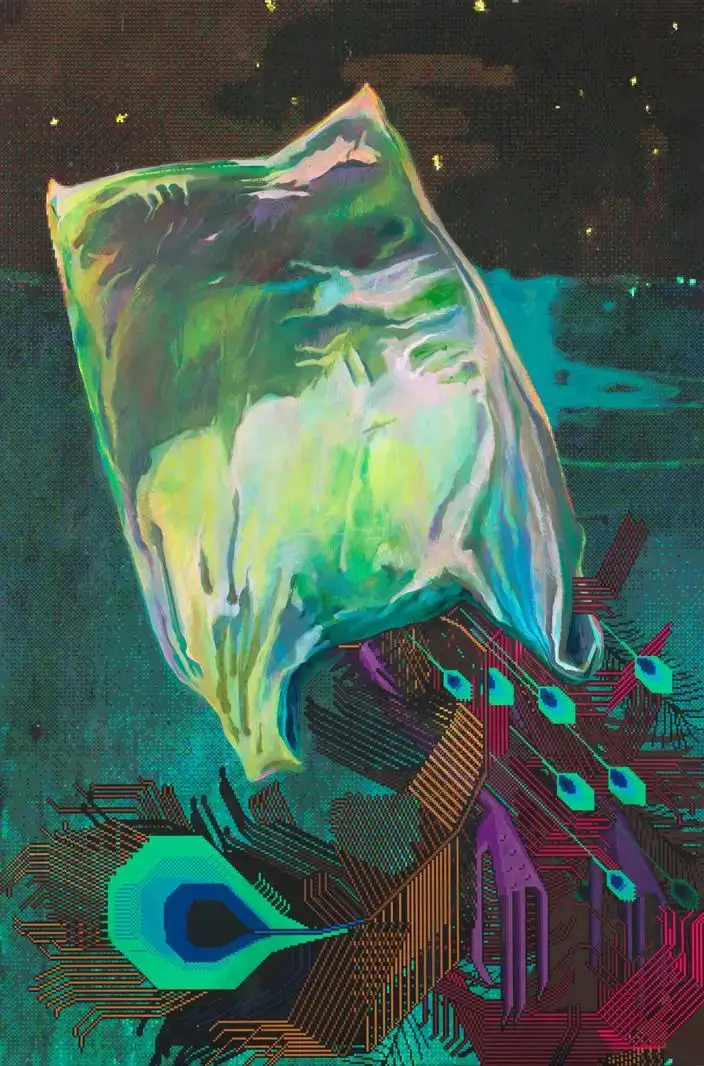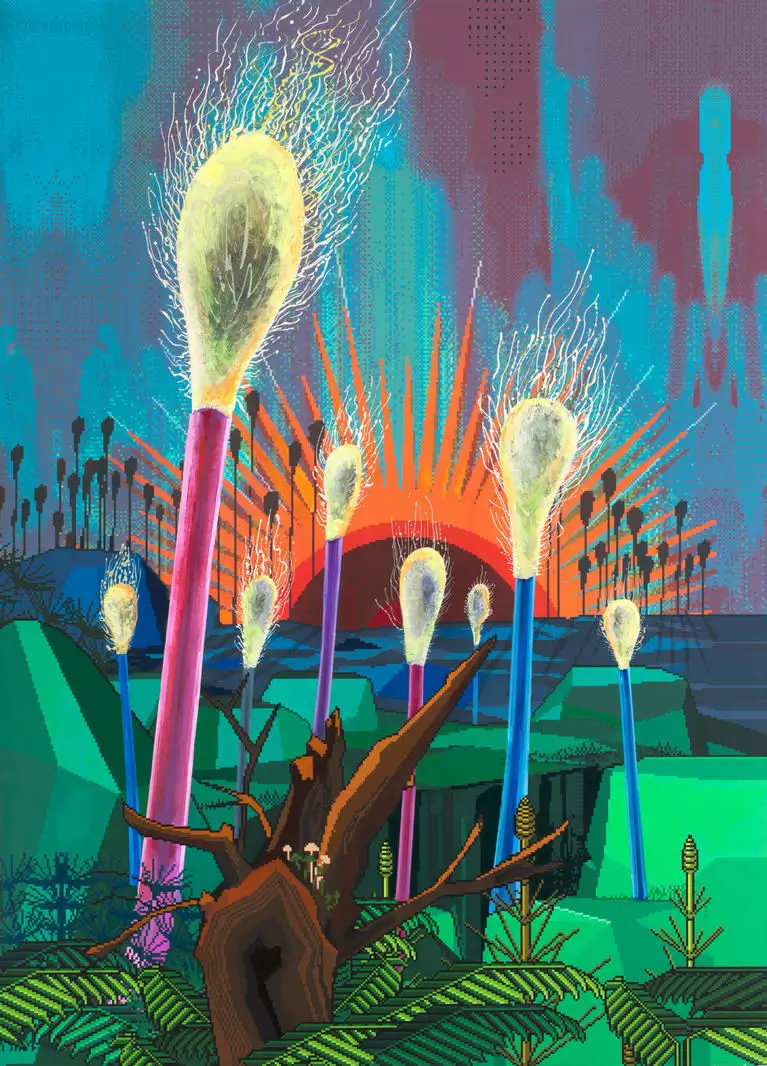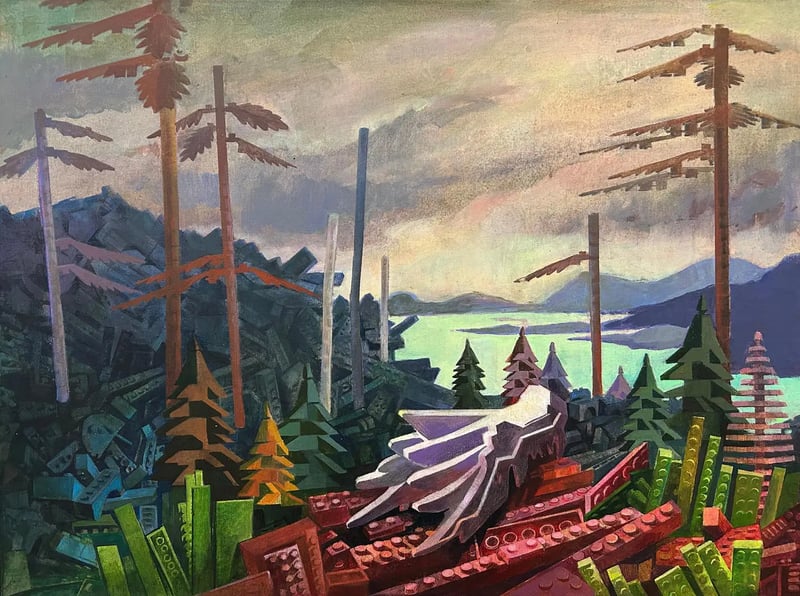
The problem of plastic pollution — including in the ocean — remains one of the most urgent today. The internet has been flooded with images of fish that swallowed plastic waste, helpless animals and birds entangled in nets and bags. Plastic tableware, cotton swabs, and polyethylene bags became prominent symbols in media. This wave of public concern about trash inspired the idea for my project — “Not everything is rotten”
In my project, an enchanted, dead, digital nature sprouts absurd organic mutants — the world has turned upside down. Bags and cotton swabs become the most resilient invaders of space. Plastic entities crawl through virtual fields and lakes, eerily aggressive and toxic, resembling pagan chimeras. Powerful plastic phantoms populate virtual reality spaces like invasive hogweed, pushing out all other forms of life. The landscape in my works is created in Photoshop, while the toxic plastic invaders are painted. This raises the question: which of these worlds is more real?