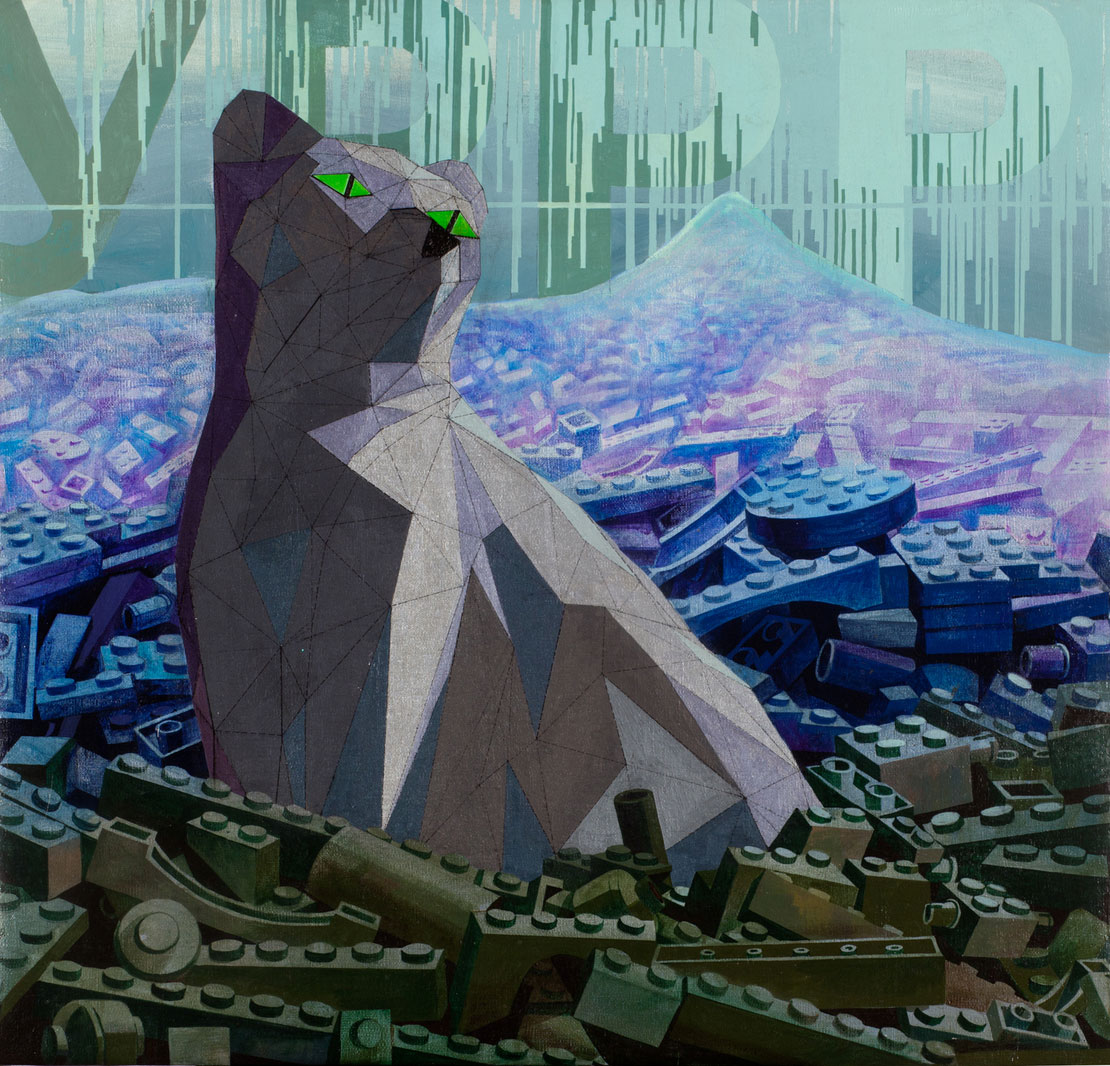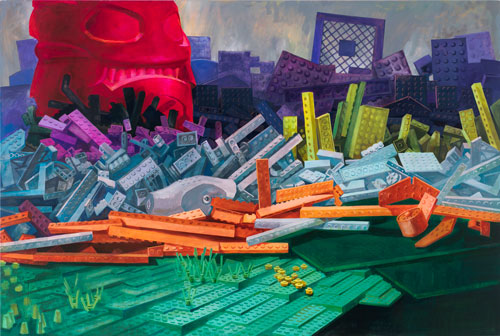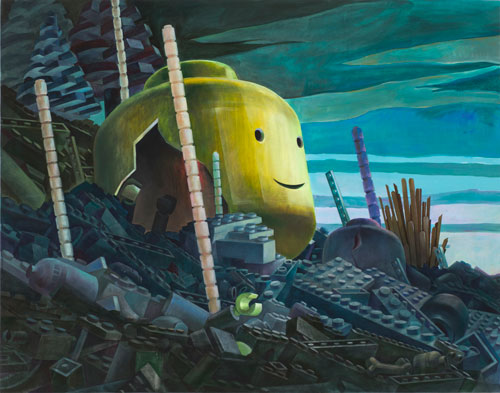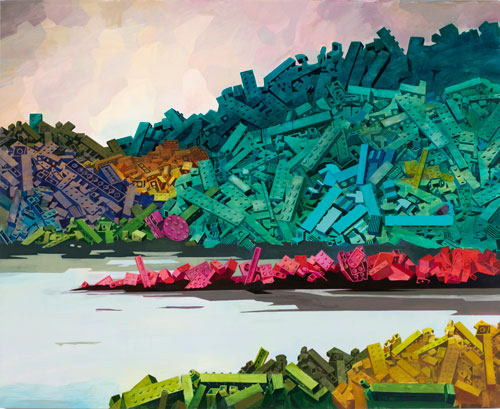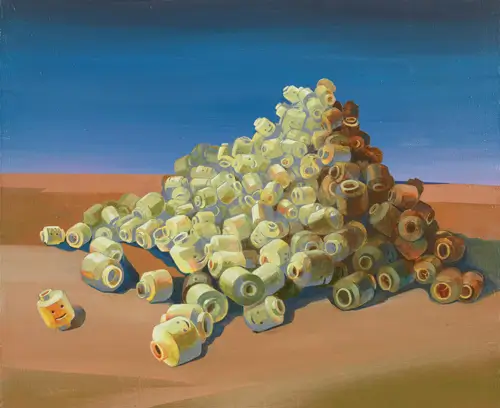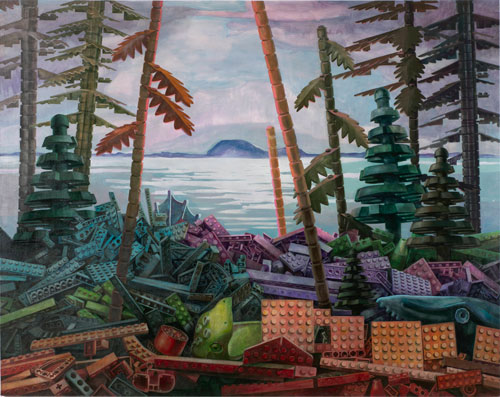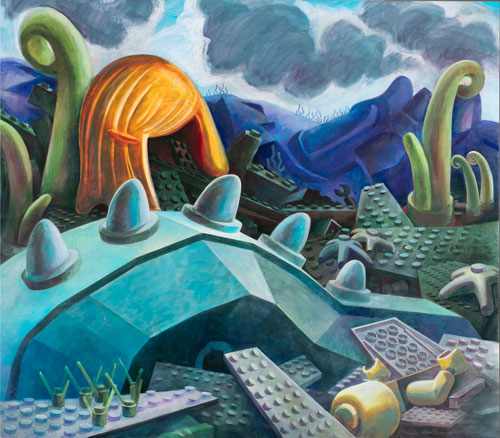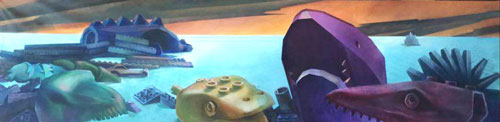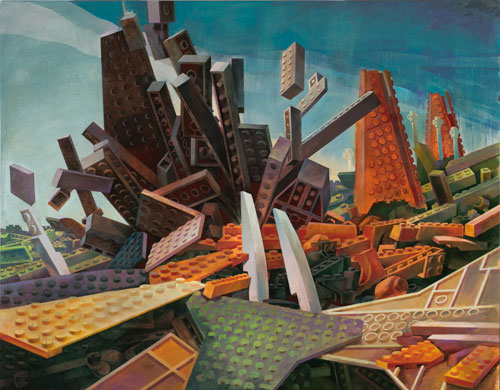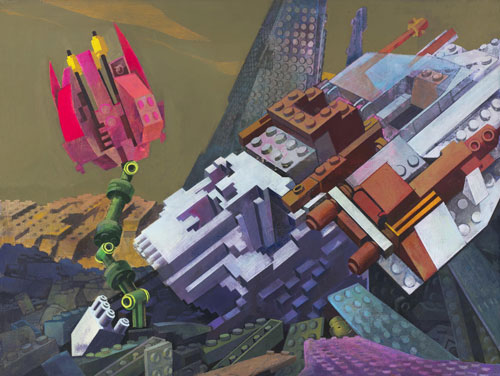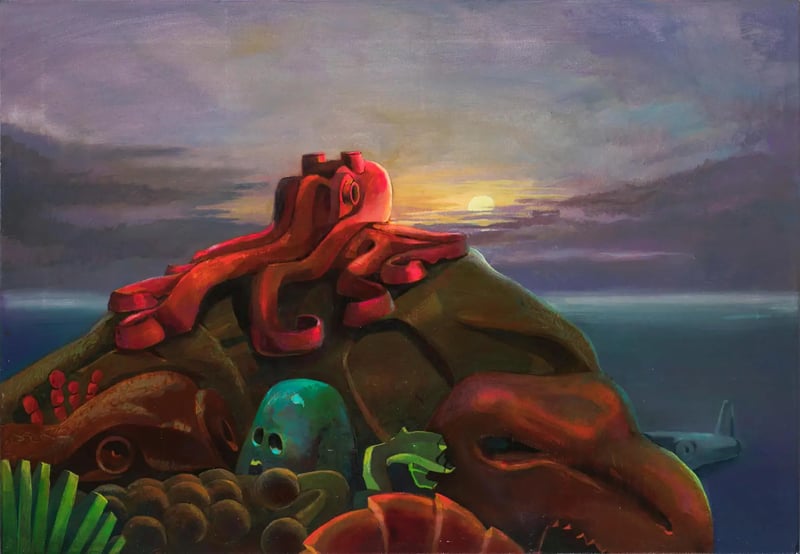
The work "Melancholy 2" continues the landscape series made from LEGO plastic parts titled "Neither Dead Nor Alive." At first glance, the viewer instinctively reads it as a romantic landscape. My "mood landscape" is an epic sunset panorama, the eternal and unshakable painterly stereotype of the “sublime.” Watching the sun descend into the sea, we immerse ourselves in the true nature of things — an elemental force created by God, with properties incomprehensible to humans. This spectacle evokes in the viewer an irrational feeling of touching the foundations of existence, eternity, and true being.
Traditionally, it is a human — the observing subject — who contemplates the sublime. But now, the observer has changed. In their place stands a plastic octopus, a LEGO construction part. We view nature through the lens of its plastic gaze. Even the nature itself — seemingly fossilized moss-covered rocks — turns out to be LEGO parts, their forms carefully designed by human creators. Thus, the human becomes the demiurge, the creator of both nature and the observer. Being expands; it becomes even more unpredictable. A new level of observation, awareness, and existence emerges. Is this a landscape or a still life? Alive or dead? Can we perceive the sublime as people of the past did, when our perception is consumed by a stream of digital images and the ideology of plastic imitation?