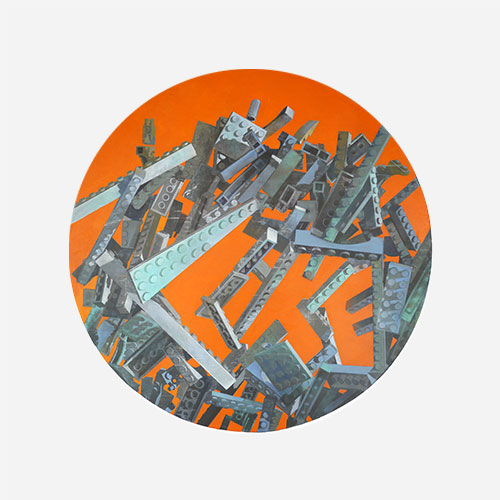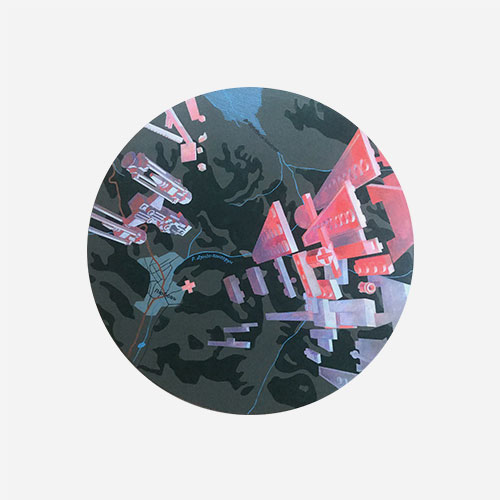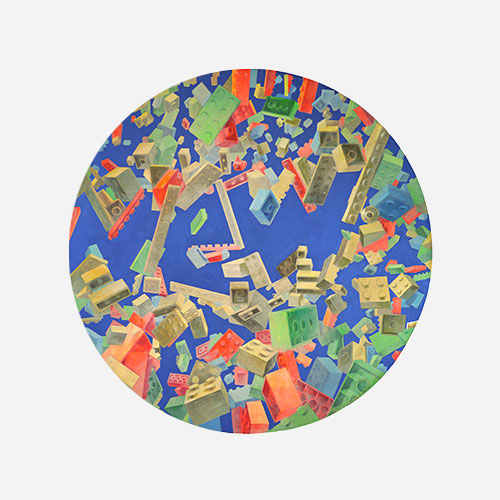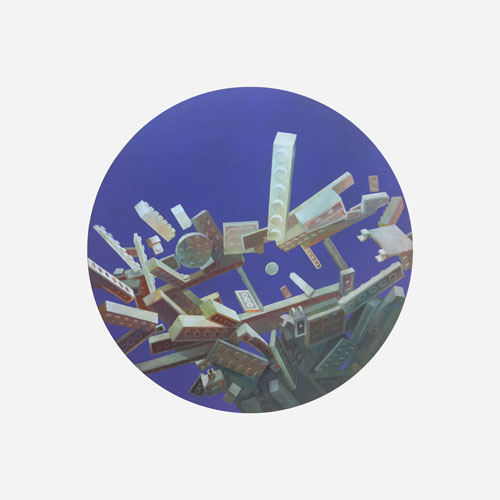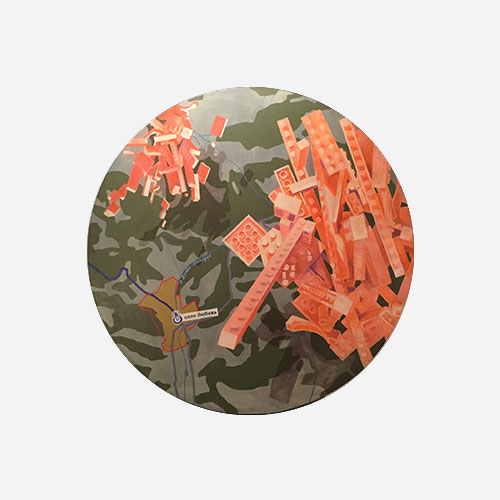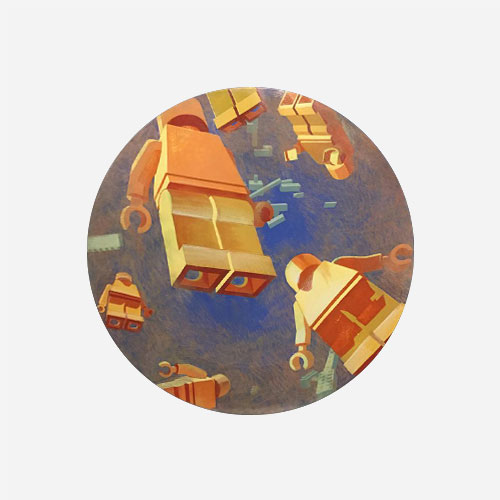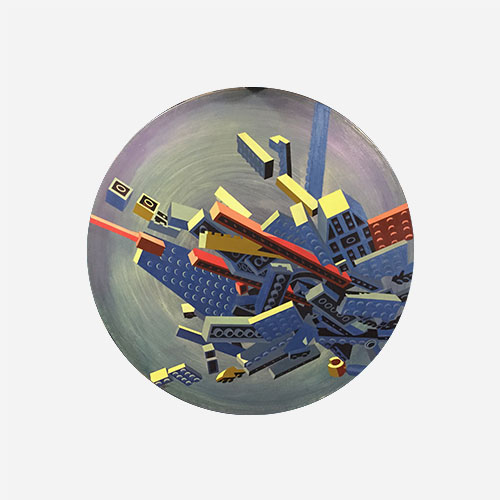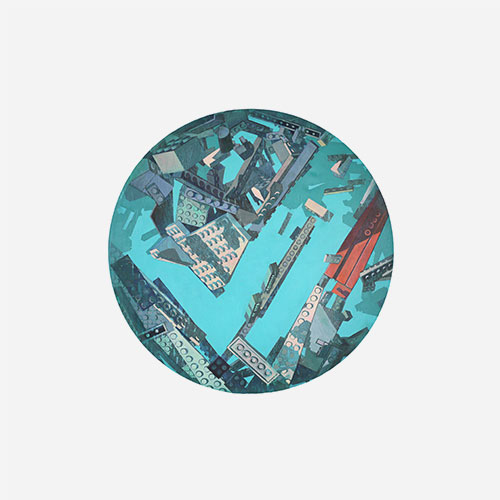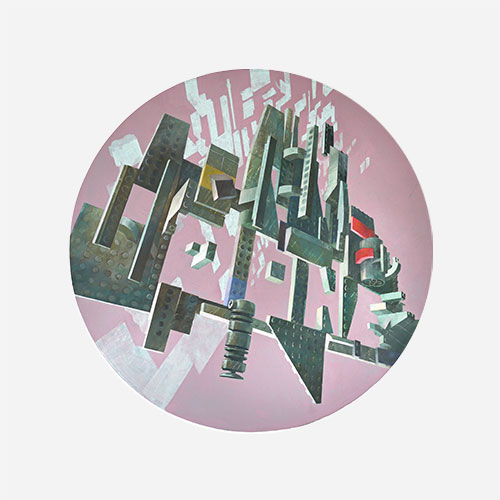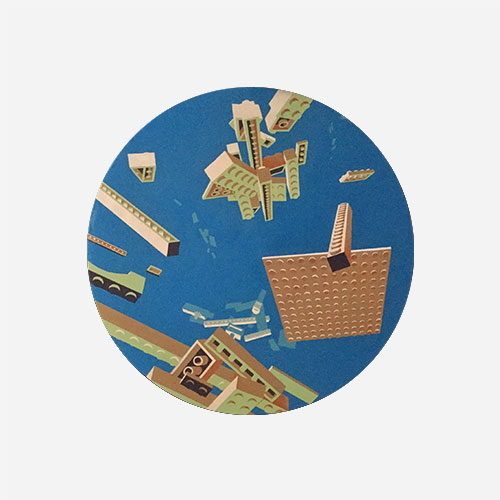
The work is connected to the previous project "The Descent of Styrene." Today, polymer products accompany us everywhere — in architecture, medicine, agriculture, sports, daily life, and art. Discovered in the 1930s and conquering the market by the 1970s, plastic replaced paper, wood, stone, and even metal; traditional materials lost their former dominance and were substituted with lightweight, inexpensive polymers. Plastic bears no trace of time, it doesn’t age, and it lacks tectonic quality. It is light, pliable, and endlessly metamorphic. Postmodernism speaks in the language of plastic — a movement that doesn’t believe in truth, juggling meanings and images.
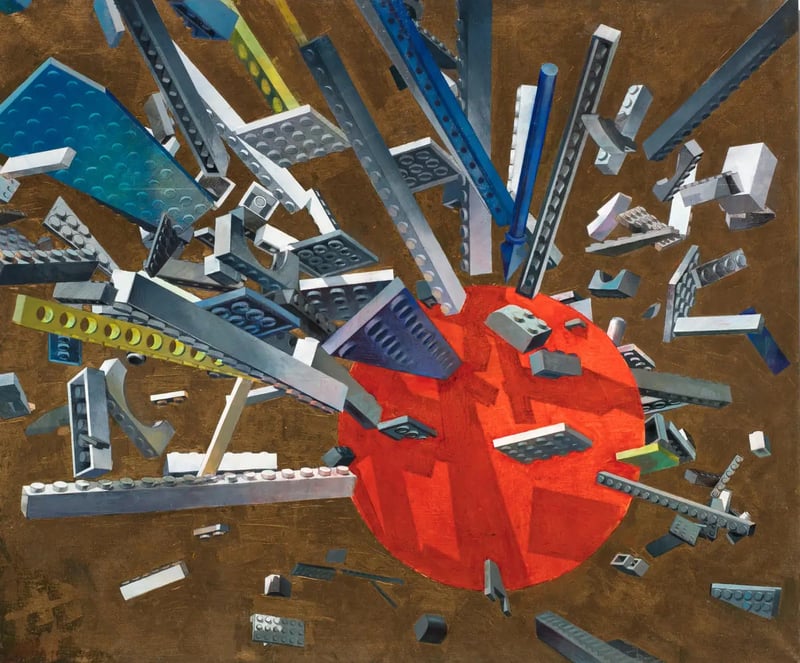
In my work, LEGO plastic parts attack a painterly suprematist red circle. Once one of the main symbols of modernism — alongside the square, which helped give rise to the very idea of geometric construction — it is now under siege by ruthless LEGO elements.